

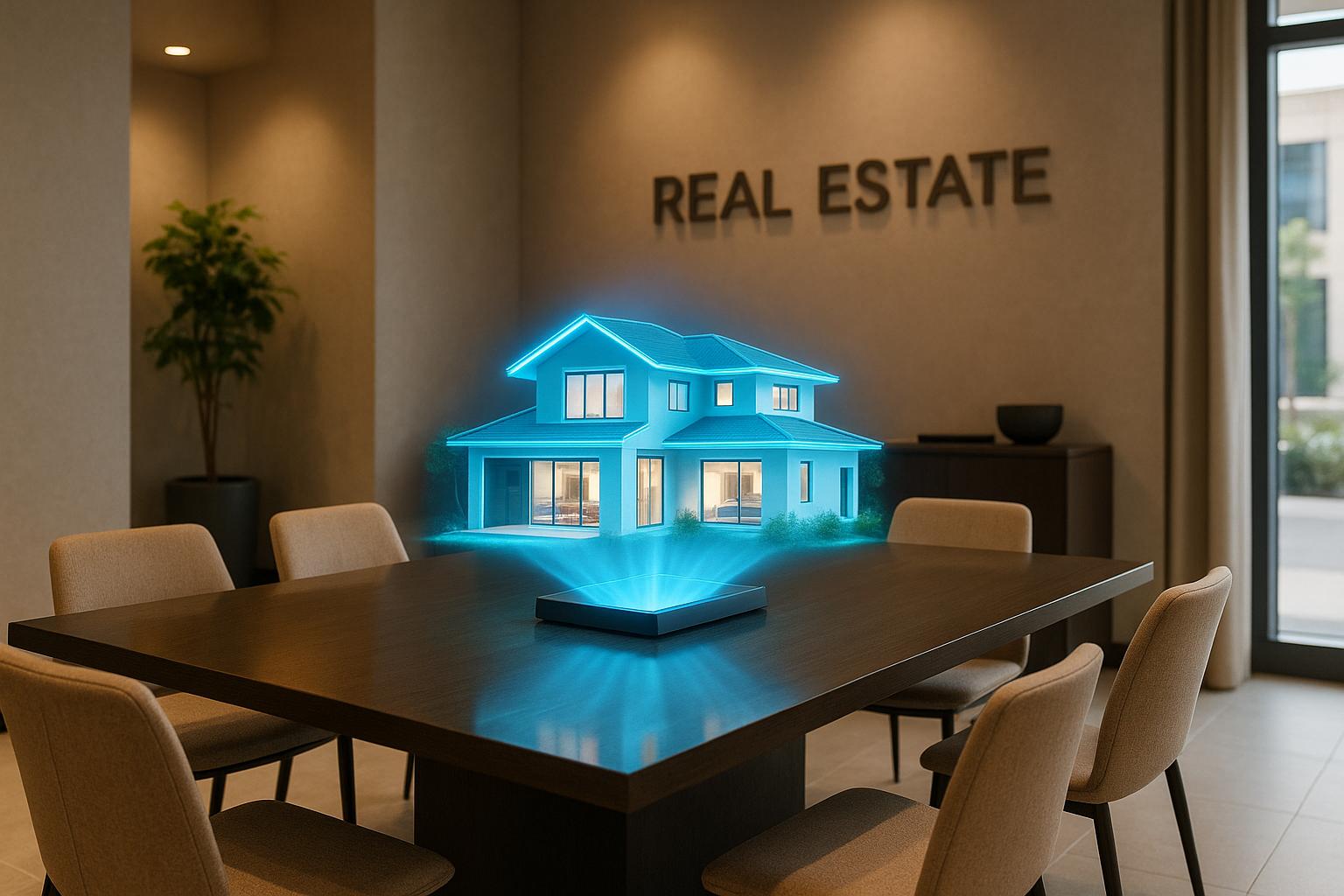

Holographic displays are transforming real estate sales by offering 3D, mid-air visuals that eliminate the need for glasses or headsets. These displays address key challenges in property marketing, such as limited physical access, static visuals, and high staging costs. Buyers can interact with properties in real-time, exploring layouts, customizing designs, and experiencing spaces like never before. Sellers benefit from faster decision-making, reduced costs, and improved client engagement.
Key Highlights:
- Immersive Viewing: 3D models allow buyers to explore properties virtually, understanding spatial flow and dimensions.
- Interactivity: Buyers can modify designs, test layouts, and personalize spaces during the viewing process.
- Cost Efficiency: Digital updates replace costly physical staging and scale models.
- Competitive Edge: Agencies adopting this technology position themselves as forward-thinking and appeal to tech-savvy buyers.
Holographic displays are reshaping how properties are marketed and sold, making the process more engaging, efficient, and client-focused.
Problems in Traditional Property Marketing
Static and Non-Interactive Presentations
Traditional property marketing often relies on flat photographs and basic floor plans, which limit a buyer’s ability to truly understand a property. As ArchiCGI points out, static renders confine potential buyers to a single frame, offering no sense of how rooms flow together, how light moves through the space, or how different areas relate to one another.
But the problem isn’t just about visuals – it’s also about engagement. Static images don’t invite buyers to interact or imagine themselves in the space. They lack the warmth, atmosphere, and dynamic qualities that bring a home to life. David Cross from CrossCopywriting.com highlights this gap perfectly:
"There’s a moment in every successful home showing that no static headshot can capture – that electric instant when you gesture toward a sun-drenched window seat, and your client’s eyes light up with possibility".
Without dynamic and immersive content, these subtle yet powerful moments that help buyers connect with a property are lost. Static presentations simply can’t replicate the emotional and sensory experience of being in the space.
Do Holograms and Lightfields have a Future for Real Estate Marketing?
How Holographic Displays Solve These Problems
Holographic displays transform the way properties are showcased, turning static presentations into dynamic, immersive experiences. Instead of relying on a buyer’s imagination to picture a space, this technology offers an interactive way to explore properties.
Better Buyer Engagement with 3D Interactivity
Holographic technology creates immersive 3D experiences that let buyers virtually navigate properties, providing a clear sense of space and layout. This approach makes the property feel more tangible, helping buyers understand its flow and dimensions in a way traditional methods can’t match.
What sets holographic displays apart is their interactive nature. Buyers can manipulate 3D models, examining properties from various angles and perspectives. This hands-on interaction keeps them engaged for longer periods, leading to stronger participation and better conversion rates.
The technology also facilitates personalized interactions between real estate professionals and clients. Buyers can explore properties at their own pace, tailoring the experience to their preferences. This level of personalization empowers buyers, making them feel more in control of the process, which often leads to more confident decision-making. Plus, this deeper engagement can translate into cost savings by streamlining the exploration process.
Cost-Effective and Scalable Staging
While the initial investment in holographic displays may be significant, the long-term savings are undeniable. These displays allow for remote property showings, cutting down on the time, money, and effort required for physical visits by both buyers and sellers.
Another major advantage is the digital flexibility of the technology. Holographic displays can be updated or modified with new digital files, eliminating the recurring costs associated with printing or physical staging. As Kite Metric explains:
"While initial investment is high, digital updates eliminate ongoing printing and deployment costs".
This means real estate professionals can create detailed 3D models of properties or projects once and then update them as needed without additional physical costs. Agents can showcase multiple properties to several clients without the logistical challenges of organizing actual visits. This efficiency not only saves money but also enhances the buyer experience by offering more options in less time.
Customization and Personalization Options
Holographic displays shine when it comes to customization. Buyers can request specific changes to holographic models, such as altering wall colors, swapping furniture styles, or reconfiguring floor plans.
The customization options go beyond surface-level changes. Buyers can experiment with different room themes, lighting conditions, and layouts through the holographic interface. This real-time adaptability helps buyers visualize themselves in the space, making the property feel more like home.
With these interactive features, buyers can test various design choices – like rearranging furniture or trying out new color schemes – without making any physical changes to the property. This level of personalization often creates an emotional connection, helping buyers picture themselves living in the space.
Holographic systems also adapt to a variety of property layouts and configurations, allowing agents to present multiple options during a single session. This eliminates the need for separate visits to explore different possibilities, streamlining the buying process and speeding up decision-making. Additionally, this flexibility helps real estate professionals stand out by offering a more modern and tailored experience.
Impact on Real Estate Sales and Marketing Strategies
Holographic displays are changing the way real estate sales and marketing operate. By offering an interactive and immersive way to explore properties, this technology is reshaping buyer behavior and streamlining the sales process.
Faster Buyer Decision-Making
With interactive 3D models, buyers can view property layouts and room connections in real time, making decisions faster and easier. This level of visualization helps buyers immediately grasp the flow and functionality of a space, cutting down on lengthy negotiations. Plus, the ability to customize layouts in real time simplifies the buying process even further. This speed not only benefits buyers but also helps real estate agencies stand out in a crowded market.
Better Brand Differentiation
The use of holographic displays also gives agencies an edge in brand positioning. By adopting cutting-edge technology, agencies signal to buyers that they are forward-thinking and ahead of the curve. Moving away from traditional marketing methods allows them to appeal to tech-savvy buyers who value innovation. For instance, one brokerage that incorporated 3D virtual tours saw an impressive 80% jump in organic leads. Leveraging such advanced tools not only enhances visibility but also positions real estate professionals as trusted experts. Additionally, the memorable experiences created by holographic displays often lead to word-of-mouth referrals, further boosting brand awareness.
Case Study or Metrics Overview
The impact of these strategies is evident in real-world results. A brokerage reported an 80% increase in organic leads after adopting advanced visualization tools. This demonstrates how agencies using holographic displays can attract modern buyers and achieve better marketing outcomes.
sbb-itb-2f9da9d
Implementation and Best Practices for Holographic Displays
Holographic displays are transforming how businesses engage with their audiences, offering a new level of immersion and interactivity. To harness this technology effectively, you’ll need to focus on the right tools, setup, and strategies.
Technical Requirements and Setup
Setting up a holographic display system isn’t just about the equipment – it’s about creating an environment where the technology shines. Start with high-quality projection systems, paired with optimized surfaces designed to bring 3D visuals to life. The space itself matters, too. Make sure it’s large enough and has controlled lighting to enhance the 3D effect.
The software you choose is just as critical. Opt for platforms that allow interactive walkthroughs and real-time customization, which can elevate the user experience. Don’t overlook the importance of a strong network connection – smooth streaming is a must for interactive content. Finally, invest time in proper calibration and staff training. A well-trained team ensures everything runs seamlessly and delivers the impact you’re aiming for.
Managing Initial Investment Costs
While the upfront costs of holographic technology can seem daunting, there are ways to make it more manageable. Start small by launching a pilot project in your main showroom. This phased approach lets you test the waters without committing to a full-scale rollout.
Flexible financing options, like leasing, can also help spread costs over time. Another smart move is partnering with property developers to share expenses, reducing financial risks. Keep a close eye on your return on investment (ROI) by tracking metrics like lead conversions and sales performance. These insights can guide your decisions on scaling up.
Partnering with Growth-Realty for Advanced Marketing Solutions
Growth-Realty is making waves in real estate marketing by combining holographic displays with cutting-edge tools like AI-driven lead generation and 360-degree virtual tours.
Their AI virtual staging service is a game-changer, allowing you to showcase both empty spaces and fully furnished interiors in stunning 3D environments. To ensure leads don’t slip through the cracks, Growth-Realty integrates CRM solutions that track and nurture prospects effectively. They also specialize in creating engaging 3D content that captivates buyers and guides them through the decision-making process.
But it doesn’t stop there. Growth-Realty extends the immersive experience beyond the showroom with follow-up strategies like email campaigns and chatbots, keeping your properties front and center in buyers’ minds. This holistic approach ensures that holographic displays not only wow your audience but also drive meaningful results, from engagement to sales.
Conclusion: The Future of Real Estate Marketing with Holographic Displays
The real estate world is moving beyond traditional marketing methods, stepping into a new era with holographic displays. These aren’t just flashy tools – they’re changing the way homes are showcased, experienced, and sold across the United States.
Why Holographic Displays Matter
Holographic displays bring a host of benefits to the table. They provide stunning visual experiences, boost engagement, and allow for interactive customization. This means buyers can make decisions faster, leading to improved conversion rates.
Virtual property tours cut down the need for countless in-person showings, while streamlined planning and development processes help reduce costs. Plus, holographic displays eliminate geographical barriers, making it easier to connect with buyers wherever they are.
Real estate businesses that embrace this technology stand out as industry leaders. It’s a chance to elevate your brand and gain a clear competitive edge. And as holographic displays become more accessible and affordable, the initial investment is becoming less of a hurdle for agencies of all sizes.
A Call to Action for Real Estate Professionals
Holographic displays are shaping the future of real estate marketing. The question is: Will you lead the charge or lag behind? Here’s how you can stay ahead.
Start using holographic technology to offer immersive, interactive experiences that simplify the buying process. Tailor these experiences to your clients’ needs, helping them make quicker decisions. Use holograms to redefine your brand and capture the attention of today’s tech-savvy buyers. Waiting too long to adopt this technology could mean losing your edge in an increasingly competitive market.
For a seamless transition into holographic marketing, consider partnering with Growth-Realty. They provide a complete solution, combining holographic displays with AI-powered lead generation, 360-degree virtual tours, and virtual staging. Growth-Realty’s end-to-end system includes CRM integration, follow-up email campaigns, and even WhatsApp chatbots, ensuring your investment delivers maximum returns by keeping buyers engaged and driving conversions.
The future of real estate marketing is here. Make holographic displays part of your strategy today and set the standard for tomorrow.
FAQs
How do holographic displays improve the property buying experience over traditional methods?
Holographic Displays: Transforming Property Buying
Holographic displays are changing the way people explore and evaluate properties by offering interactive 3D experiences that feel almost like stepping into a home. Unlike traditional photos or videos, these displays let buyers navigate spaces dynamically, giving a much clearer sense of layouts and room dimensions.
What’s more, buyers can personalize interiors on the spot – trying out different furniture arrangements or testing color schemes in real time. This hands-on approach not only makes the process more engaging but also helps buyers feel a stronger connection to the property, boosting their confidence in making decisions, even without setting foot inside.
What are the upfront costs of using holographic displays in real estate, and how can businesses manage these expenses effectively?
The cost of integrating holographic displays into real estate marketing can vary quite a bit. For instance, basic holographic tools like fans or LED displays typically fall within the $500 to $3,500 range. On the other hand, more advanced 3D holographic systems can set you back anywhere from $2,000 to over $10,000, depending on their size, quality, and features.
To keep these costs manageable, businesses might explore renting or leasing equipment rather than purchasing it outright. This strategy can significantly lower upfront expenses. Another smart option is to invest in scalable solutions, which allow companies to expand their holographic setups gradually as their marketing needs evolve. This way, real estate firms can embrace cutting-edge technology while keeping their budgets in check.
How can real estate agencies use holographic displays to stand out in the market?
Real estate agencies are tapping into the potential of holographic displays to offer immersive, interactive experiences that grab the attention of potential buyers. With these displays, clients can virtually explore properties in stunning detail – even from miles away. This makes property tours far more convenient and saves valuable time for both buyers and agents.
On top of that, holographic scale models and dynamic visual presentations bring listings to life in a way that’s hard to forget. By using these advanced tools, agencies not only elevate their marketing game but also establish themselves as forward-thinking leaders in a highly competitive market.

